Choosing your stream in the eleventh standard feels like setting your entire destiny in stone, especially if your heart is set on high-flying cockpits. A common misconception floating around high school corridors is that if you choose Commerce or Arts, your aviation dreams are instantly grounded. That is simply not true anymore. Earning a Commercial Pilot License in India depends entirely on specific subject mastery, not your overall stream label. Navigating a pilot career after 12th is entirely possible for any dedicated student, provided you understand how to clear the official eligibility bottlenecks early.
The Directorate General of Civil Aviation has very strict, non-negotiable academic rules. They do not care if your school graduation certificate says Commerce, Humanities, or Science, but they absolutely mandate proof of learning for two foundational subjects before granting a commercial license.
The Academic Blueprint for CPL Eligibility
The official civil aviation guidelines state that a candidate must have completed their 10+2 schooling level with Physics and Mathematics. This requirement exists because modern aircraft systems and navigation patterns rely heavily on applied science concepts.
The NIOS Loophole for Non-Science Students
If you opted for Accountancy and Economics instead of science, you do not need to repeat two whole years of school. The National Institute of Open Schooling offers a brilliant, legally accepted bridge program. Non-science students can register directly with NIOS to sit solely for the individual Physics and Mathematics examinations.
Once you clear these specific on-demand papers, your marksheet combined with your original 12th board results completely satisfies the central aviation authority’s educational requirements. Hundreds of successful commercial airline captains in India have used this precise open-schooling path to launch their careers.
Why Physics and Math are Mandatory
Flying might look like pure art from the outside but inside the cockpit it is mostly practical math and physics. You need a solid grasp of numbers to compute weight distribution balance, track atmospheric pressure alterations, and calculate exact fuel depletion rates while facing strong headwinds.
Demystifying Entrance Exams and Ground Coaching
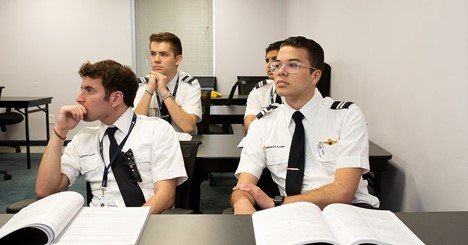
Getting your school certificates sorted is just step one. The real challenge involves clearing the heavy technical theory papers set by the government board, which requires targeted preparation.
Investing your time in professionalpilot entrance coaching institutions makes the daunting open-schooling syllabus remarkably easy to digest. These specialized classrooms are designed to take a student who has not looked at a science book in years and guide them through complex mechanics using simple, relatable language.
The Strategic Advantage of Structured Entrance Coaching
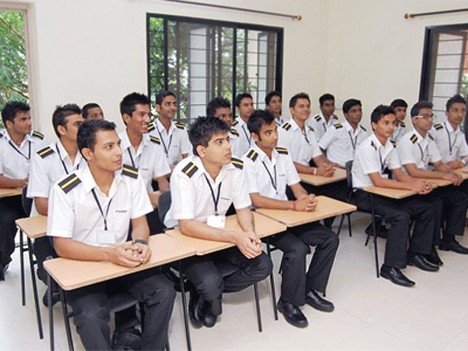
Transitioning from basic school algebra to specialized flight planning requires consistent mental rewiring. Dedicated aviation entrance coaching academies use structured test series, interactive instrument software mockups, and regular sample question drills to make sure you fully master these core topics before facing the real examiners.
Utilizing an organized coaching structure offers immense benefits to young candidates:
- Structured, step-by-step breakdowns of heavy physics topics like wave mechanics and electrical circuits.
- Direct access to specialized flight computers and navigation drafting tools under expert guidance.
- Regular weekly evaluation papers designed exactly around the latest online testing formats.
- Comprehensive assistance with administrative formalities like getting your computer number or scheduling medical clearances.
Laying the Foundation During Student Pilot Training
Trying to tackle flight operations without your academic base sorted creates massive delays. Flying clubs charge high hourly rates for aircraft rentals, and you do not want to waste precious cockpit time trying to figure out basic trigonometry definitions while sitting mid-air in a noisy trainer plane.
Focusing heavily on your theoretical knowledge during the initial student pilot training phase saves massive amounts of money and reduces performance pressure later. When you walk onto the flight line with your written exams already cleared, your training path becomes incredibly fast, smooth, and highly efficient.
Conclusion
Passed theory exam results stay officially active for five years, giving you plenty of time to finish your flying hours.
Stream choices in school do not define your ability to command an aircraft safely. The right academic guidance makes the transition from books to the skies smooth and highly structured. Pilot Training Academy provides specialized aviation ground training classes to help students from all academic backgrounds clear their papers and build highly successful commercial flying careers.
Frequently Asked Questions
Can a commerce student successfully build a pilot career after 12th in India?
Yes, commerce students can absolutely build an aviation career by clearing the mandatory Physics and Math papers separately via the NIOS board.
Is there an entrance exam coaching program for non-science students?
Yes, specialized pilot entrance coaching institutions offer tailored foundation programs to help non-science students master flight physics and navigation formulas easily.
What is the minimum age required to join aviation entrance coaching academies?
Most students choose to join ground training classes right after turning seventeen to prepare for their exams alongside their school finals.
How long does it take to clear the NIOS math and physics bridge exams?
The preparation and testing process through open schooling usually takes around three to six months depending on exam schedules.