India’s aviation sector is moving fast right now. New aircraft orders, expanding airline routes, and rising passenger numbers have changed the career landscape completely. Ten years ago, pilot training felt like something only a small group could afford or access. That picture looks very different today. More students are actively searching for training for pilots in India, hoping to build long-term careers in commercial aviation. The confusion starts almost immediately, though.
Students hear about DGCA exams, flying hours, medical tests, simulator sessions, and CPL training, but nobody explains the actual sequence properly. One person says flying school comes first. Another says medical matters more. Half the advice online sounds copied from somewhere else.
This blog breaks the process down in a practical, honest way without turning it into a textbook.
Understanding What a Commercial Pilot Actually Does
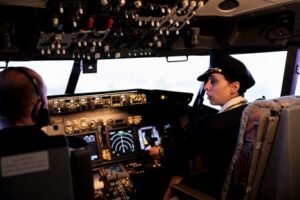
Most people think pilots only fly aircraft. Real aviation work is much wider than that.
Commercial pilots are responsible for navigation, weather analysis, coordination of the cockpit, communication with the air traffic control, fuel calculations and safety protocol during every stage of flight. Consistency and discipline are expected from airlines, as in aviation, nothing is small.
A calm mindset becomes important very quickly. Training instructors usually notice this early during simulator sessions.
Strong commercial pilot license preparation helps students build that discipline before airline assessments even begin.
Complete the Required Qualification
Students must complete 10+2 with Physics and Mathematics from a recognized board. Candidates without these subjects can still qualify later through NIOS or equivalent programs approved by DGCA.
English communication skills matter too. Aviation communication globally happens in English, especially during radio telephony exercises and cockpit coordination.
Basic eligibility includes:
- Minimum age of 17 years for Student Pilot License
- Minimum age of 18 years for CPL
- Physics and Mathematics qualification
Marks are important, obviously. Still, aviation training depends more on consistency than rank scores. Students who stay disciplined daily usually perform better during the flying stages.
Clear DGCA Medical Tests
Medical examinations become the first serious checkpoint in pilot training. DGCA-approved medical assessments are a prerequisite for joining a flying training academy. These are tests that examine vision, hearing, heart and blood pressure, mental state and overall physical health. Many students wait to get medical tests after admission. That creates unnecessary problems later. Experienced aviation mentors often recommend completing medical clearance before paying training fees.
Class 2 Medical normally comes first. After progressing further into training, candidates move toward DGCA Class 1 certification.
Aviation is demanding mentally, too, not only physically. Long simulator sessions and flight evaluations can become exhausting sometimes.
Select the Right Flying Training Academy
This step affects almost everything afterwards. Some academies maintain better aircraft availability, cleaner training schedules, stronger instructors, and more consistent flying operations. Others struggle with delays caused by maintenance issues or limited aircraft access.
Students should check:
- DGCA approval status
- Instructor quality and flight experience
- Aircraft condition and simulator support
Several academies across India now combine classroom learning with advanced simulator practice. That approach helps trainees understand cockpit procedures faster instead of depending only on theory notes.
One thing students rarely expect? Weather delays. Flying schedules can change suddenly during monsoon periods, especially in certain regions.
Begin Ground School Training
Ground school forms the academic foundation of aviation training. Students study Air Navigation, Meteorology, Air Regulations, Technical General, and Radio Telephony during this phase. These subjects later connect directly with real cockpit operations.
Many trainees underestimate theory classes at first. Then DGCA exams arrive. That changes the attitude very quickly.
Daily revision works better than studying everything together at the last minute. Aviation subjects involve concepts that build slowly over time. Strong theory preparation also improves confidence during flight instructor evaluations.
Complete Flying Hours
DGCA currently requires at least 200 flying hours for Commercial Pilot License eligibility in India.
Training includes solo flying, instrument flying, cross-country exercises, and night operations. The first solo flight becomes unforgettable for most students. Nervous energy, excitement, silence inside the cockpit for the first time. Strange feeling, honestly.
Training assessments usually involve:
- Flight performance observation
- Emergency handling procedures
- Communication accuracy during operations
Some students complete flying hours faster than others, depending on weather conditions, aircraft availability, and academy scheduling efficiency.
Patience becomes part of aviation training whether students expect it or not.
Clear DGCA Exams and Skill Checks
Candidates take flying tests, submit theory papers and sit a DGCA exam and practical skill test after fulfilling their flying requirements and theory preparation.
The handling of the aircraft and its navigational accuracy is evaluated along with the ability to respond to emergencies, to be aware of their cockpit environment and to communicate effectively with others. Aviation systems have become more advanced and are now expected to give better performance in terms of technical understanding than in previous years.
India’s airline industry continues to expand rapidly. According to DGCA industry projections, fleet growth across domestic carriers is expected to create significant pilot demand during the coming decade.
That industry growth has increased the importance of serious Commercial Pilot License Preparation across training institutes nationwide.
Conclusion
Becoming a commercial pilot in India takes focus, patience, medical fitness, and structured preparation. The process may feel demanding during exam phases or flying evaluations, but proper guidance changes the experience completely.
Good aviation training is never only about completing hours. Strong mentorship, consistent learning, and real cockpit discipline shape long-term success in this field. Students planning a future in aviation often begin that journey with Pilot Training Academy.
FAQs
What is the eligibility for Training for a Pilot in India?
Students must complete 10+2 with Physics and Mathematics from a recognized board, along with DGCA medical fitness requirements.
How long does Commercial Pilot License Preparation take in India?
Most students complete CPL training within 18 to 24 months, depending on weather conditions, aircraft availability, and DGCA examination schedules.
Why is choosing the right Flying Training Academy important?
A quality academy provides experienced instructors, better simulator training, proper aircraft maintenance, and smoother flying schedules.
How many flying hours are required for a Commercial Pilot License in India?
DGCA currently requires a minimum of 200 flying hours for CPL eligibility in India.