Aviation Career Planning After 12th: Choosing the Right Training Path
Every year around May, right after board results drop, a strange thing happens in thousands of Indian households. A kid who spent two years buried in physics and chemistry textbooks suddenly announces they want to fly planes for a living. Parents panic a little. Relatives have opinions. And somewhere in between excitement and confusion nobody quite knows what the actual first step looks like.
That confusion is exactly why planning a pilot career after 12th grade deserves more attention than it usually gets. This is not a decision you make on a Tuesday afternoon based on one YouTube video. It takes research, a realistic budget and an honest look at what the training actually involves before you sign up anywhere.
By the end of this piece, you will have a clearer picture of how the path works, what mistakes to dodge and how to actually pick a training route that fits your goals instead of just following whatever your neighbor’s cousin did.
Why Timing Matters More Than You Think
Most students think the clock starts once they enroll in a flying school. It doesn’t. It starts the moment you choose your 12th-grade subjects.
DGCA (Directorate General of Civil Aviation) requires Physics and Mathematics at the 10+2 level for anyone applying for a pilot license. Skip these, and you’re already looking at bridge courses or, worse, starting over. I’ve spoken to students who chose commerce in 11th because “flying sounded fun” only in 12th, and by then their options had shrunk considerably.
So the real planning window opens in class 10, not after the boards. If you already know aviation interests you, lock in PCM early. It saves a year, sometimes two.
Understanding The Ground Training Requirement
Here’s something a lot of aspiring pilots don’t realize until they’re deep into research: flying an aircraft is only half the syllabus. The other half happens entirely on the ground, in a classroom, with textbooks that look suspiciously like engineering material.
DGCA mandates ground subjects covering Air Navigation, Air Regulations, Aviation Meteorology, and Technical General and Specific knowledge. These aren’t optional extras. You cannot sit for your Commercial Pilot License exam without clearing them, and honestly, this is where most students either build genuine confidence or completely lose momentum.
A structured ground school does more than prep you for exams. It builds the mental framework you’ll lean on during actual flight training, when there’s no time to Google what a particular navigation term means mid-air.
Comparing Training Paths Realistically
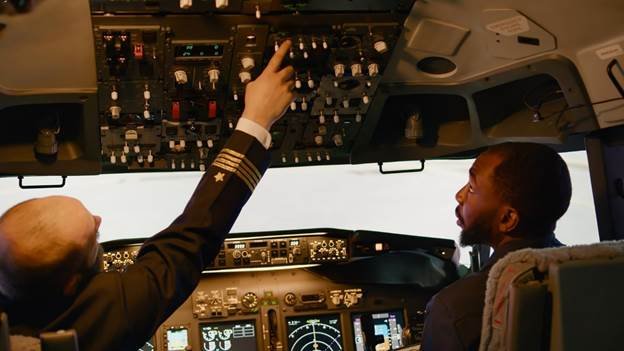
Once ground subjects are sorted, the bigger fork in the road appears: where do you actually complete flight training?
Broadly, students choose between training entirely in India, going abroad (the USA, South Africa and New Zealand are common choices), or a hybrid model where ground classes happen locally and flying happens through partner schools overseas. Each route has trade-offs in cost, weather-related flying delays, and how quickly you can log required hours.
Cost is where families get the most anxious, and fair enough from 40 to 70 lakh rupees and sometimes more based on the type and place of the aircraft. While many times training overseas is more expensive, it may also lead to fewer weather-related issues and quicker hour build. Neither option is universally better. It depends on your budget your risk tolerance and honestly how patient you are.
This is exactly where proper pilot career guidance India-wide becomes valuable instead of optional. A good mentor or counselor does not just hand you a brochure. They map out realistic timelines based on your specific situation not a generic best-case scenario pulled from a website.
What Good Training for Pilot in India Actually Looks Like
A lot of institutes advertise similar promises. Expert faculty, modern facilities, high success rates. The real differentiator shows up in the details students rarely ask about upfront.
QualityTraining For Pilot In India typically includes these non-negotiables:
- Instructors who are practicing or former airline pilots, not just theory teachers reading from slides
- Regular mock examinations that mirror actual DGCA exam difficulty and format
- Transparent fee structures with no surprise costs added midway through the course
- Continuous doubt-clearing support rather than one-way lecture delivery
If an institute can’t clearly answer questions about instructor background, pass rates, or total cost breakdown before you enroll, treat that as a warning sign, not a minor detail to overlook.
The Mistake Most Students Make
That’s genuinely the biggest one I have noticed talking to families going through this process.
Pupils tend to choose the first institute that a friend recommends or the one that has the most appealing Instagram promotions without taking time to evaluate the teacher’s experience and the results of students from that institute. Aviation training is a multi year multi lakh responsibility. It is often a bad idea to take it as an impulse decision, as gaps in the ground knowledge inevitably turn into problems in flight training around the year. Slow down at the research phase if able, visit the institutes in person and speak to existing students (not just a website) and it will save you money and stress later.
Building A Realistic Roadmap
A sensible sequence looks something like this. Finish 12th with PCM and required marks. Clear the DGCA Class 1 medical examination early, since medical disqualification later in the process is far more common than people expect. Join a structured ground school for CPL theory. Move into flight training, whether domestic or abroad. Complete RTR(A) licensing, which is mandatory before your CPL is issued. Finally, begin airline preparation and interview readiness.
Skipping steps or reordering them casually rarely ends well. Medical checks especially deserve early attention. Nothing is worse than investing a year into ground classes only to discover a medical issue that affects licensing eligibility.
Conclusion
Planning an aviation career after 12th is not about finding a shortcut. It’s about sequencing findings correctly from subject choice in school to medical checks to choosing training that really builds competence not just paperwork.
Spend time researching colleges, get questions about cost and faculty that might feel uncomfortable and do not take the movement lightly because it is the foundation of all that comes after. Those students who are careful and do not rush into things based on hype have smoother and less stressful journeys to the cockpit. For students in Pune looking for structured, mentorship-driven guidance through this exact process, Pilot Training Academy Pune has spent over a decade helping aspiring pilots guide ground training and career planning with clarity rather than confusion.
FAQs
What subjects are required in 12th for a pilot career in India?
Physics and Mathematics are mandatory at the 10+2 level, along with a minimum aggregate percentage set by DGCA guidelines. Chemistry is common but not compulsory.
How long does pilot training in India typically take?
Ground training generally takes around six months, while total training including flight hours can range from 18 months to 3 years depending on the chosen path and institute.
Is pilot training abroad better than training in India?
Not necessarily better, just different. Training abroad often means fewer weather delays and faster flying hours, while training in India can be more cost effective and easier for ongoing mentorship.
What is the DGCA Class 1 medical exam and when should I take it?
It’s a mandatory medical fitness check required before flight training begins. Taking it early, ideally before committing to ground classes, helps avoid wasted time and money if any disqualifying condition is found.