
A commercial pilot career depends on more than academic scores. Airlines and flying schools use aptitude assessments to evaluate how a candidate thinks, reacts, and performs under pressure, long before that candidate ever enters a cockpit. Through our airline preparation classes, we have observed that many students with strong theoretical knowledge still find this particular stage challenging, simply because it tests a different set of abilities. This blog explains what the aptitude test evaluates and how candidates can prepare for it methodically.
Understanding the Airline Pilot Aptitude Test
The aptitude test is not a conventional subject-based examination. There is no fixed syllabus to memorize beforehand.
Instead, it measures a candidate’s natural capacity to process information rapidly, coordinate physical responses, and maintain composure during time-sensitive tasks. Airlines rely on these results to estimate how a candidate will perform during actual flight training.
The assessment generally includes the following components:
- Numerical reasoning – speed and accuracy in calculations, ratios, and pattern recognition
- Verbal reasoning – comprehension, instruction-following, and situational interpretation
- Spatial awareness – judgment of direction, orientation, and three-dimensional visualization
- Psychomotor coordination – simulator or joystick-based tasks measuring reflexes and multitasking
- Personality and behavioral evaluation – assessment of stress response, judgment, and teamwork
Test formats vary between airlines and training organizations, but the underlying objective remains consistent: identifying candidates capable of managing complex, high-pressure environments with precision.
Why the Aptitude Test Carries Significant Weight
Many aspiring pilots assume that clearing DGCA ground examinations represents the most demanding stage of their preparation. In practice, the aptitude test evaluates qualities that academic study alone cannot demonstrate.
Airline training programs require substantial financial investment for every cadet selected. Selection committees therefore prioritize candidates who display sound judgment, quick reflexes, and stable decision-making under pressure, qualities that only a structured assessment can reveal.
Our pilot entrance coaching program addresses this requirement directly. Several candidates who perform well academically still require focused practice to strengthen reaction speed and situational awareness, as conventional education rarely develops these skills.
Key Areas of Preparation
1. Numerical and Logical Reasoning
Numerical accuracy plays a central role in aviation, from fuel planning to load calculations. Candidates should focus on the following:
- Mental arithmetic without calculator assistance
- Ratio, percentage, and proportion-based problems
- Number sequence and pattern recognition exercises
- Applied logical reasoning grounded in basic physics concepts
Time management is essential in this section, as most tests allow limited duration per question.
2. Verbal and Comprehension Ability
Clear communication directly affects flight safety. Misinterpreted instructions can create operational risk, which is why this section evaluates the following:
- Reading comprehension under time constraints
- Accurate interpretation of written instructions
- Identification of precise meaning within complex statements
Regular engagement with aviation publications, technical manuals, and safety documentation strengthens this ability over time.
3. Spatial Orientation
Pilots must judge direction, altitude, and aircraft positioning using instrument data rather than external visual cues. This section typically evaluates a candidate’s ability to do the following:
- Visualize three-dimensional rotation and movement
- Interpret directional changes accurately
- Understand instrument displays representing physical orientation
Consistent practice with simulation-based exercises produces measurable improvement within a defined preparation period.
4. Psychomotor Coordination

Certain assessments include joystick-based simulation tasks requiring candidates to manage multiple instructions simultaneously. Preparation strategies that support this skill include the following:
- Regular practice with flight simulator applications
- Structured multitasking exercises beyond aviation-specific content
- Controlled, deliberate movements rather than abrupt corrections
5. Personality and Behavioral Assessment
Technical competence alone does not determine suitability for a flying career. Airlines evaluate the following through interviews and structured questionnaires:
- Decision-making capability under pressure
- Communication style and collaborative ability
- Self-awareness and honesty in describing past experiences
Authentic, well-considered responses tend to leave a stronger impression than rehearsed answers during this stage.
Building an Effective Preparation Routine
Unstructured practice rarely produces consistent results. A defined preparation schedule strengthens performance across all test components.
A structured weekly framework may include the following:
- Thirty to forty minutes of numerical and logical practice daily
- Two to three dedicated sessions per week for spatial reasoning exercises
- Regular reading of aviation-related material to strengthen comprehension
- Simulator-based psychomotor practice at scheduled intervals
- Weekly mock interviews to refine behavioral responses
Sustained, incremental practice produces stronger long-term results than concentrated preparation immediately before the test date.
Common Preparation Errors to Avoid
Candidates frequently approach aptitude tests using academic study methods, which limits their overall readiness. The following errors are commonly observed:
- Prioritizing theoretical preparation while neglecting reaction-based skills
- Underestimating the importance of spatial and psychomotor practice
- Rushing through numerical sections due to time pressure
- Providing rehearsed responses during behavioral evaluation
- Omitting simulator practice before the scheduled assessment
Addressing these areas early in the preparation process significantly improves overall test performance.
The Role of Structured Coaching
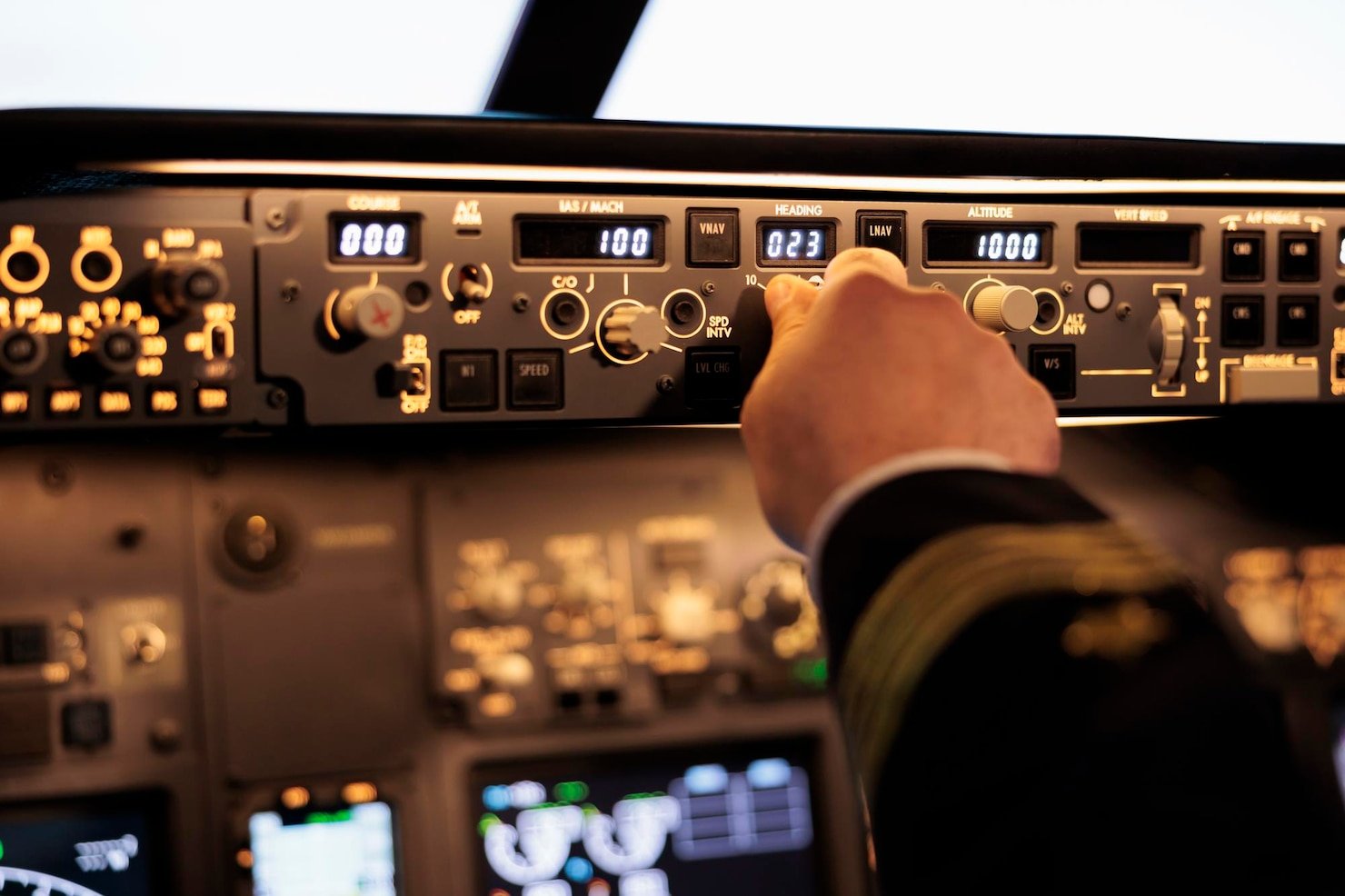
Independent preparation often lacks clear direction regarding which skills require additional focus. Structured aviation entrance coaching provides the following advantages:
- Mock assessments aligned with actual airline test formats
- Targeted feedback identifying specific areas for improvement
- Simulator-based training for spatial and coordination skills
- Interview preparation tailored to aviation-specific scenarios
Candidates who receive structured guidance generally approach the actual assessment with greater confidence, as the test format becomes familiar well in advance.
Positioning the Aptitude Test Within the Broader Pilot Journey
Aptitude assessments typically appear at two key stages: prior to airline cadet program selection, and occasionally before admission to certain flying schools abroad. While DGCA ground examinations establish theoretical competence, the aptitude test evaluates an entirely separate skill set.
Both components hold equal importance for a stable and successful career trajectory. Overlooking either stage can create avoidable obstacles later in the training process.
Conclusion
Success in an airline pilot aptitude test depends on disciplined preparation, honest self-evaluation, and sufficient practice to perform naturally under pressure. Candidates who understand their own strengths and limitations tend to perform more consistently than those relying solely on speed or memorization.
At Pilot Training Academy, our training approach integrates structured theoretical instruction with practical, reaction-based preparation aligned with actual assessment patterns. This ensures that students enter their aptitude test with clarity and confidence rather than uncertainty.
A disciplined, well-structured approach to preparation reflects the same standards expected throughout a professional aviation career.
Frequently Asked Questions
1. What is the primary objective of an airline pilot aptitude test?The test evaluates a candidate’s reasoning ability, coordination, and decision-making capacity to determine readiness for flight training and cockpit responsibilities.
2. Can candidates improve their aptitude test performance through structured practice?Yes. Numerical speed, spatial reasoning, and psychomotor coordination improve significantly with consistent, targeted practice, particularly through simulator-based exercises.
3. Is prior flying experience necessary to clear an aptitude test?No. Most candidates complete this assessment before beginning formal flight training, as it measures inherent potential rather than existing flying skills.
4. How does aptitude test preparation differ from DGCA examination preparation?DGCA examinations assess subject-based knowledge such as navigation and meteorology, while aptitude tests evaluate reasoning speed, coordination, and behavioural responses under pressure.