Flying a commercial aircraft demands more than memorising formulas and regulations. It demands judgment, and judgment is built through guidance, not guesswork. A pilot mentorship program gives aspiring aviators exactly that: a structured relationship with someone who has already flown the path they are attempting to walk. This blog looks at why mentorship matters so much during the early years of aviation training and how it quietly prevents the kind of mistakes that cost students time, money and confidence.
Why Mistakes Happen So Often in Early Training
Aviation theory is dense. Students juggle Air Navigation, Meteorology, Regulations and Technical subjects, often within a tight six-month window. Under that pressure, errors creep in easily.
Some common ones include:
- Misreading exam patterns and studying the wrong depth of a topic
- Skipping foundational concepts to rush through advanced ones
- Poor time management between ground subjects and personal life
- Underestimating the RTR(A) practical component until the last moment
- Losing motivation after one difficult mock test
None of these mistakes stems from a lack of intelligence. They stem from a lack of direction. A student without a mentor is essentially flying blind through their own preparation, which is an odd position to be in when the entire goal is learning to fly.
What a Pilot Mentorship Program Actually Does
A mentor is not a substitute for a teacher. Faculty members deliver the syllabus. A mentor sits beside the student and helps them apply it wisely.
Personalised Study Direction
Every student learns differently. One person grasps navigation instantly but struggles with meteorology. Other finds regulations dry and forgettable. A mentor identifies these patterns early and adjusts the study plan accordingly, rather than treating every student with the same generic checklist.
Realistic Industry Exposure
Textbooks explain rules. Mentors explain reality. A mentor who has flown for an airline can describe how those regulations actually apply in the cockpit, which turns abstract theory into something a student can visualise and retain.
Emotional Steadiness
Training for a commercial licence is a long process, and confidence dips are common. A mentor notices when a student is quietly losing steam and steps in before frustration becomes withdrawal. This kind of support rarely appears in a syllabus, yet it often decides whether a student finishes strong or drops off midway.
How Mentorship Prevents Costly Errors

Pilot career guidance that India aspirants receive through mentorship is not just academic. It is strategic. Mentors help students avoid decisions that seem harmless in the moment but create real setbacks later.
A few examples worth noting:
- Choosing the wrong flying school abroad – Not every foreign FTO suits every student’s budget or timeline. A mentor with industry contacts helps evaluate options honestly.
- Attempting DGCA exams underprepared – Reattempts cost money and delay the entire career timeline. Mentors track readiness through mock scores before recommending an exam date.
- Ignoring RTR(A) practice until the end – This practical license is mandatory for CPL issuance, and last-minute preparation rarely goes well.
- Overlooking airline-specific requirements – ATPL aspirants targeting a particular carrier need tailored preparation, something generic coaching often misses.
These decisions may look small individually, but together they shape whether a student’s aviation career moves smoothly or gets stuck in avoidable delays.
Structured Student Pilot Training Benefits From Consistent Feedback
Student pilot training works best when feedback is frequent, specific and honest. A mentor who reviews mock test performance weekly can catch a weak topic before it becomes a pattern of failure. Waiting for a final exam result to discover a gap is far too late in a field were precision matters this much.
Regular mentor check-ins typically cover:
- Subject-wise strengths and weaknesses
- Time management between theory and personal commitments
- Mental readiness before major exams
- Clarity on next steps after ground training
This ongoing rhythm keeps students accountable without making them feel micromanaged, which is a balance many self-taught learners never quite find on their own.
Building Discipline Alongside Technical Skill
Aviation rewards discipline more than talent. A mentor reinforces habits that matter long after ground classes end, such as double-checking work, respecting procedures, and staying calm under pressure. These are not skills a textbook can teach effectively. They are absorbed through observation and repeated practice under someone experienced.
Students who train with consistent mentorship often carry this discipline into simulator sessions and real flight training, where small errors carry far heavier consequences than a wrong answer on a mock paper.
Choosing the Right Kind of Guidance
Not every mentorship relationship delivers equal value. The most effective ones share a few qualities.
- Experience that matches the goal – A mentor with an airline background offers more relevant insight than one with only teaching experience.
- Availability for doubts – Guidance that only appears occasionally cannot catch problems early enough.
- Honesty over flattery – A good mentor points out weak areas directly instead of offering comfortable but unhelpful reassurance.
- Long-term perspective – The best mentors think beyond the next exam and help students plan their entire career path.
Aspiring pilots evaluating an institute should ask specifically about mentorship structure, not just classroom hours. The difference often shows up months later, in exam results and in confidence.
Here are three additional sections you can insert before the conclusion. They stay within the same tone and do not repeat any point already made.
Mentorship During the Shift From Ground School to Flight Training
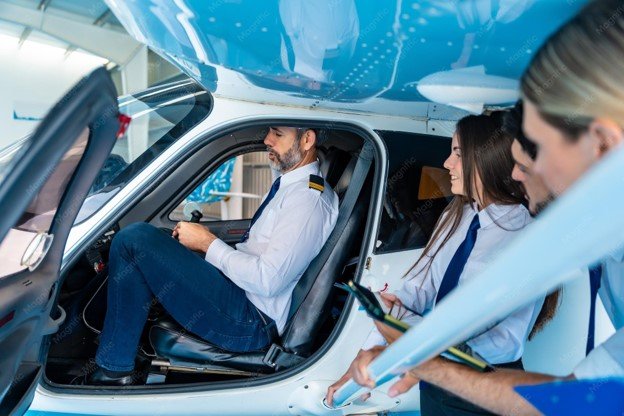
Ground classes prepare a student’s mind. Flight training tests that preparation in real conditions, and the gap between the two can feel wider than expected. A mentor helps bridge this shift by explaining what to expect inside the cockpit, from checklist discipline to handling unexpected weather changes mid-flight.
Students who move into flight training without this preparation often struggle with basic transitions, such as translating theoretical navigation into actual in-flight decisions. A mentor who has already made this jump can flag these adjustment points early, so the student walks into their first flying hours with fewer surprises and steadier nerves.
Why Small Batches Make Mentorship More Effective
Mentorship works best when it is personal, and personal attention is hard to deliver in large, crowded classrooms. Smaller batches allow mentors to notice quiet struggles before they turn into failed attempts, something that is nearly impossible when one instructor is managing sixty students at once.
A smaller group also encourages students to ask questions without hesitation, which matters more than it seems. Many training gaps exist simply because a student felt embarrassed to ask something in a large class. Institutes that keep batch sizes manageable tend to produce more confident, better-prepared students, not because the syllabus changes, but because the attention given to each learner does.
Conclusion
Strong ground schooling matters, but mentorship is what turns that schooling into a career. It reduces avoidable mistakes, keeps students steady during tough phases, and offers the kind of practical wisdom no textbook can replace. Institutes that build mentorship into their training, such as Pilot Training Academy Pune, give students a genuine advantage: someone experienced walking beside them, not just ahead of them.
Frequently Asked Questions
1. What is a pilot mentorship program?
It is a structured guidance system where an experienced aviation professional supports a student through study planning, exam preparation and career decisions throughout their training.
2. How does mentorship help during DGCA CPL preparation?
Mentors identify weak subjects early, track mock test progress, and guide students on exam readiness, which reduces the chances of reattempts and delays.
3. Is pilot career guidance in India necessary for choosing a flying school abroad?
Yes. Every flying school differs in cost, timeline and reputation, and proper guidance helps students avoid choices that later affect their budget or career pace.
4. Can mentorship improve confidence during student pilot training?
Mentorship offers regular feedback and emotional support, which helps students stay motivated through difficult phases instead of losing momentum midway.