
Most pilot aspirants think the hard part is passing the DGCA exams. Then they start actual flight training alongside their theory classes and realise the real challenge was never one or the other. It’s doing both at the same time without losing your mind. If you’re juggling an aviation ground school schedule with flying hours, you already know what I mean. Your brain is stuck between memorising airspace classifications and remembering to trim the aircraft on final approach, and somehow you are supposed to be sharp for both.
There is no magic formula that this blog is going to provide you with. What you will find is a workable and proven approach to organising your week, preserving your sleep and retaining what you read rather than forgetting it as soon as you hit the cockpit! Little by little, big changes.
Why Ground School and Flying Pull You in Two Directions
Ground classes demand stillness. You sit, you read, you memorise meteorology charts and regulation clauses until they stick. Flying demands the opposite. Quick decisions, physical coordination, reacting to things in real time. Your brain has to switch gears constantly, and that switching costs energy most students don’t budget for.
A lot of students treat these as two separate lives. Morning is flying, evening is books, and there’s no overlap in thinking. That’s actually where most people go wrong. The truth is, ground school knowledge is what makes flying training make sense. Air Navigation is not abstract once you have actually flown a cross-country route. Meteorology clicks differently once you have felt turbulence firsthand. Treating them as connected rather than separate saves time and mental effort.
Build a Weekly Rhythm That Actually Works
Random studying between flights does not work long-term. What works is a rhythm your body and brain can predict. Here’s what that generally looks like for students managing both tracks well:
- Fixed study blocks right after ground school lectures, not hours later when memory has already faded
- One full rest day a week with zero flying and zero books, non-negotiable
- Flight preps the night before, reviewing checklists and weather briefings so the morning is not rushed
- Weekend revision sessions grouped by subject, not randomly picked topics
None of this is complicated. It’s discipline, applied consistently. Students preparing for commercial pilot training pune programs often underestimate how much a fixed routine protects them from burnout later in the course.
Treat DGCA Subjects Like Muscle Memory, Not Cramming
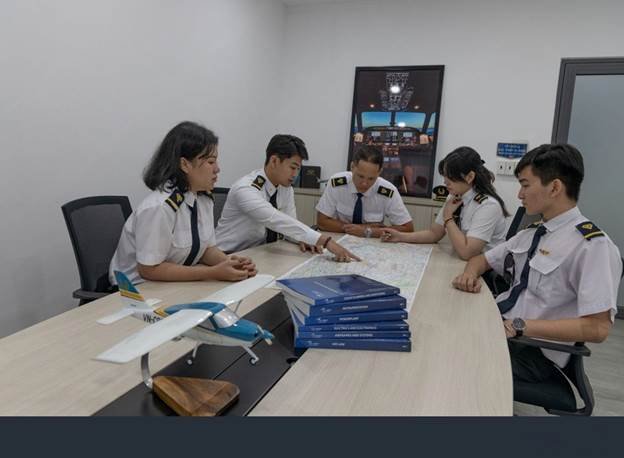
Here’s something instructors rarely say out loud. Cramming works for a college exam. It does not work for DGCA papers and it definitely does not work once you’re in a cockpit trying to recall regulations under pressure. The subjects need to become instinct, not information you retrieved five minutes before a test.
Short daily revision beats long weekend marathons every time. Twenty minutes a day on Air Regulations sticks better than three hours once a week. This is basic learning science, spaced repetition and it applies directly to why students enrolled in the best DGCA ground classes consistently outperform those studying in bursts. The institute matters but the habit matters more.
Talk To Your Instructors, Don’t Guess
One mistake student often make is trying to solve the scheduling problems for themselves. The only thing that most academies can’t do is reschedule a flying session to accommodate a ground school mock test if they know about the conflict early on. Avoiding the idea of an emergency until the last possible moment and then panicking is no help to anyone.
Good instructors have seen this exact struggle hundreds of times. They know which subjects need more runway before an exam and which ones can wait a week. Use that experience. Asking for guidance is not a weakness it’s what separates students who finish strong from those who burn out halfway through.
A Quick Real-World Example
One student, preparing for both flight hours and DGCA theory at the same time, kept failing mock tests despite studying every night. Turns out she was studying right after flying sessions when she was mentally drained from concentration during the flight itself. Once she shifted her study block to early morning before flying, her scores jumped within three weeks. Same content, same hours studied, completely different result. Timing mattered more than effort in her case and that’s true for a lot of people.
Signs You are Burning Out and What to Do About It
Balancing both tracks is demanding and pretending exhaustion does not exist helps nobody. Watch for these signs before they become bigger problems:
- Forgetting basic checklist items, you knew cold a week ago
- Feeling irritated or foggy during ground lectures you’d normally enjoy
- Sleep is getting shorter while screen time or study hours get longer
- Losing interest in flying sessions you used to look forward to
If two or more of this sound familiar, it’s time to scale back for a few days rather than push through. Rest isn’t wasted time in aviation training it’s part of the training.
Making the Most of Simulator and Practical Sessions
Simulator time is where ground school theory and actual flying finally shake hands. Use these sessions deliberately. Before stepping in, glance through the specific subject connected to that flight scenario, whether it’s navigation or aircraft systems. Afterwards, spend ten minutes writing down what confused you. That small habit turns simulator hours into study material instead of just practice hours.
Students who treat their aviation ground school subjects as tools for flying, rather than separate exams to survive, tend to progress faster through both. The two are not competitors for your time. They are partners, whether it feels that way at 6 am before an early flight or not.
Conclusion
Flight training and ground school the balance is not about finding additional hours in the day, there aren’t any. It is about safeguarding the time that you already have, studying on purpose and not in panic and knowing when to seek assistance rather than do everything to your own death. Create a rhythm, be consistent with this and have faith that the theory you are using in class is molding you to become a calmer, sharper pilot in the air. This balance is what Pilot Training Academy Pune has found to work for countless students and it begins with structure, not stress.
FAQs
How many hours should I study daily while also attending flight training?
Most students manage well with 45 minutes to an hour of focused daily revision rather than long irregular sessions, especially when preparing for DGCA ground subjects alongside flying hours.
Can I complete DGCA ground classes and flight training at the same time?
Yes, many aspiring pilots pursue both together. It requires a structured schedule and clear communication with instructors to avoid clashing sessions during exam weeks.
What is the best way to prepare for DGCA exams while flying regularly?
Spaced daily revision, grouped by subject, works far better than cramming. Reviewing theory right after flight sessions also helps connect concepts practically.
Does commercial pilot training in Pune offer flexible scheduling for working students?
Most reputed institutes, including hybrid ground schools in Pune, offer flexible batch timings and online options so students can manage flying, studying, and other commitments without conflict.